Portable toilets are increasingly recognized for their environmental benefits, significantly diminishing the carbon footprint typically associated with traditional sanitation options. One major ecological advantage of portable toilets is their efficient usage of water. Modern units can operate effectively with minimal water, sometimes just a few gallons per flush, versus the several gallons used per flush by conventional toilets. This water efficiency contributes to conservation efforts and supports sustainable water resource management. Furthermore, portable toilets often utilize eco-friendly chemicals. These biodegradable agents break down waste effectively, reducing harmful environmental impacts. By opting not to plumb toilets directly into the ground or to a municipal system, portable units also decrease contamination risks and lower infrastructural burdens on local sewage systems. Moreover, the manufacturing process of portable toilets has been optimized over the years, focusing on recyclable materials while encouraging the use of eco-friendly cleaning methodologies. This conscientious approach further enhances sustainability credentials. For large events, festivals, or construction sites, deploying portable toilets in place of constructing permanent facilities can circumvent substantial ecological disruption, balancing the need for sanitation with preservation. Recycling waste products whenever possible remains another noteworthy practice in the portable toilet sector, with waste often repurposed for useful composting initiatives instead of mere landfill discardation. Many businesses leading the portable toilet industry actively prioritize these environmental strategies, reinforcing their role as eco-conscious providers committed to promoting a sustainable future.

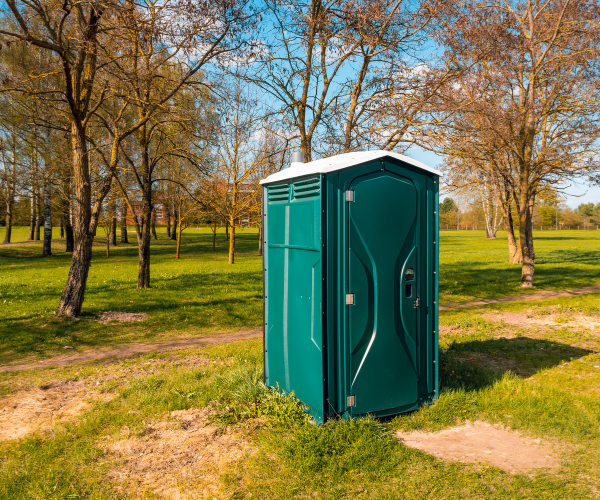
Portable Toilet Rentals in Unicoi County, Tennessee
Call today for a free quote (423) 740-6901
Portable Toilet
Fast, Easy, & 100% Free To Get Started
Over 20 Years Experience
With over 20 years of service in Unicoi County, our deep community ties and unwavering commitment to quality set us apart. We strive to maintain trust with our customers by delivering reliable and professional portable toilet solutions.
Premium Quality Service
Our unwavering commitment to quality ensures that each portable toilet unit is sanitized, well-maintained, and provides unmatched comfort. Trust us for clean and reliable service every time.
Fast, Reliable Delivery
Experience the speed and reliability of our portable toilet delivery service, where punctuality meets precision. We ensure timely set-ups tailored to your schedule for seamless event planning.
Superior Portable Toilet Service in Unicoi County
Call for a Free Quote Today
(423) 740-6901
Experience top-tier portable toilet solutions in Unicoi County, Tennessee. As a locally owned and highly reliable company, we deliver outstanding service across the region. Whether you're hosting a wedding, organizing a festival, managing a construction site, or planning a party, our dependable portable toilets are perfect for any occasion in Erwin, Banner Hill, and surrounding areas. Rely on us for clean, accessible, and first-rate facilities that enhance your event. Our committed team guarantees timely delivery and impeccable service, backed by years of industry expertise.
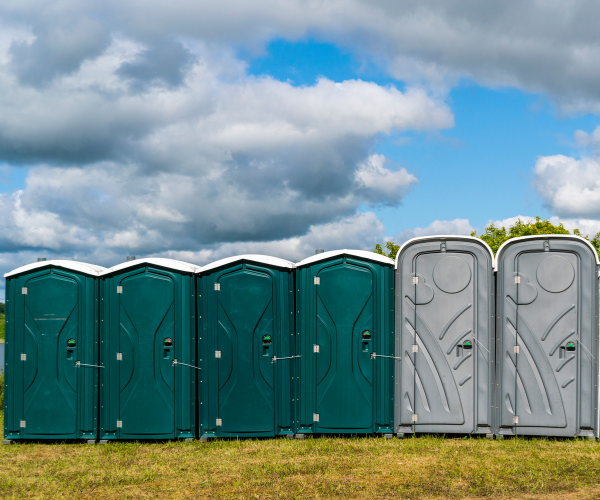
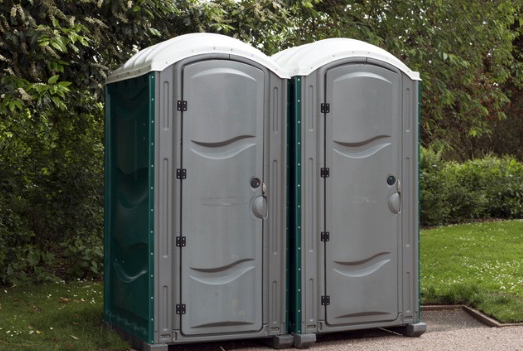
Our standard porta john rental units are durable and reliable for any commercial build site, housing development, public works project, or remodel job.Features include dome lighting, grated floors, and an “In-Use” locking mechanism for privacy and comfort. Regularly maintained, inspected, and cleaned by FusionSite at your location.
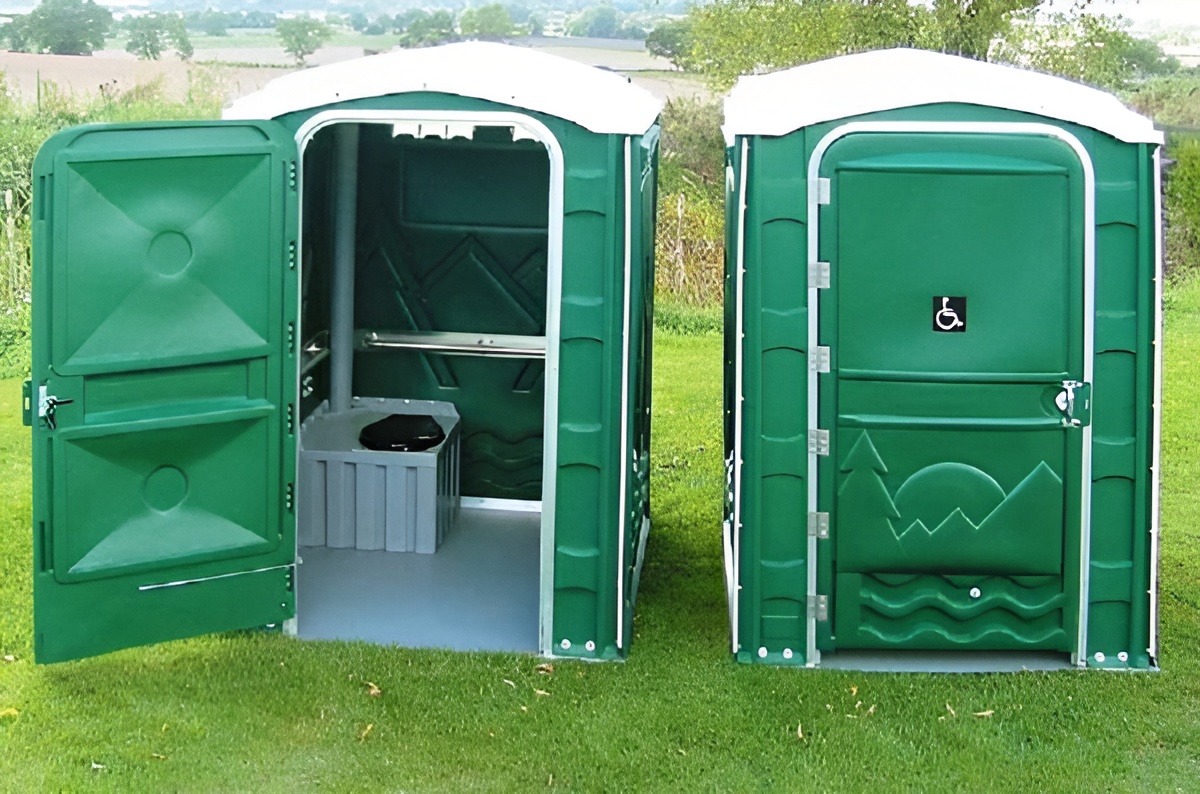
Developed as an alternative to full ADA-compliant restrooms, the Liberty is a spacious, wheelchair-accessible unit that can also be promoted as a family-sized restroom. Includes a patented flat-floor system for easy wheelchair access and maneuverability.Handrails, paper holder, and rotary latch are designed for simple, intuitive end-user operation.
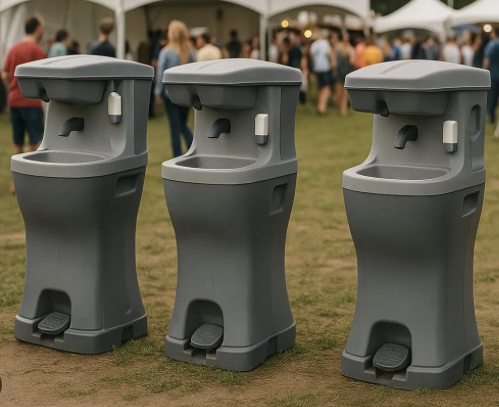
Portable hand washing stations are essential for keeping your work site sanitary and clean. Features hands-free foot pumps, liquid soap, and paper towels.Perfect for job sites without water hookups, these units can handle hundreds of washes between services.
We Proudly Serve
Standard Portable Toilets
MC Septic offers standard portable toilets across Tennessee, perfect for events and construction sites with reliable, clean sanitation solutions.
High Rise Portable Toilets
Our high-rise portable toilets in Unicoi County meet the challenge of high-altitude sites, ensuring convenience and sanitation above all.
Restroom Trailers
MC Septic provides luxurious restroom trailers in Unicoi County, offering elegance and comfort at any occasion with climate control features.
Roll off Dumpsters
In Unicoi County, MC Septic delivers dependable roll-off dumpster services, ideal for efficient waste management during any project or event.
Septic Tank Cleaning
MC Septic offers thorough septic tank cleaning across Tennessee, ensuring optimal system functionality and preventing costly repairs.
Grease Trap Cleaning
Specializing in grease trap cleaning, MC Septic serves Unicoi County with expert maintenance to promote healthier, more efficient systems.
Fencing & Barricades
In Tennessee, MC Septic's fencing and barricades provide secure site protection and boundary management for events and constructions.
Residential Storage
MC Septic delivers secure and flexible residential storage solutions in Unicoi County, tailored to safeguard your possessions with ease.
Unicoi County Portable Toilet Services and More
Navigating the process of obtaining a quote and arranging delivery for our Portable Toilets in Unicoi County is both convenient and straightforward. Simply click the 'Get A Quote' button visible throughout our website to begin. Our user-friendly form requires just a few details—your first name, last name, phone number, and email address—ensuring that we can provide you with a tailored service estimate rapidly. Our dedicated customer service team is always ready to assist should you have any inquiries, ensuring a seamless rental experience. Once the quote is approved, scheduling your delivery is just as hassle-free. We understand the importance of promptness when it comes to event planning or site management, so our team works diligently to confirm your delivery timetable, respecting your schedule and specific needs.Our logistical expertise allows for the conscientious planning of delivery routes and times, ensuring that you receive your portable toilet rentals punctually and as agreed. Our transport fleet is equipped to manage large or small orders, and we are committed to maintaining our flawless track record of on-time delivery across Erwin and the surrounding areas. Whether your event is taking place at a bustling festival or on a quiet construction site, you can rely on us to meet your requirements with professionalism, making your experience with us both efficient and satisfying.Choosing our service means partnering with a company that values your time and convenience as much as you do, providing impeccable service and quality units that enhance any environment.
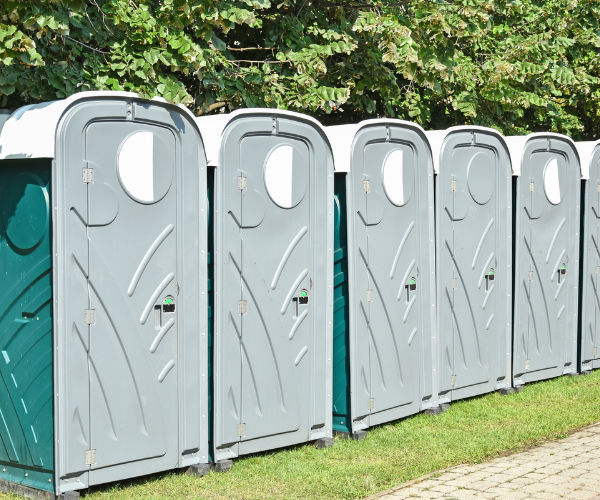
Nestled within the charming settings of Unicoi County, our portable toilet services stand as a beacon of convenience and quality. With the beautiful landscapes of Tennessee as your backdrop, including the renowned beauty of the Appalachian Trail and the excitement of the annual Unicoi County Apple Festival, our facilities enhance the enjoyment of outdoor festivals, community gatherings, and natural adventures. Drawing on our deep local knowledge, we ensure that our services align perfectly with the community's diverse needs, delivering units that are as reliable as they are clean. Our reputation for high standards ensures guests can focus on the joy of the event, trusting us to manage their sanitary needs. Prominent local events and scenic attractions highlight the unique spirit of Unicoi County, and our portable toilets provide the seamless transition between comfort and nature, accommodating both intimate family events and large public gatherings. Elevate your event experience by choosing us, as we draw on our long-standing commitment to excellence and community engagement. Our tailored solutions are as practical as they are stylish, suited for every terrain and occasion, making us the leading choice in portable sanitation.
Community-focused and regionally trusted, our portable toilet service stands as the perfect solution for any event in Unicoi County. We excel with a hands-on approach to local trends and needs, consistently providing service with elegance and efficiency. Unrivaled in both quality and customer care, we guarantee each unit remains immaculately clean and fully functional, elevating the guest experience. From rustic weddings to large public gatherings, our team remains committed to delivering innovative sanitation solutions that complement the natural beauty of our county.
We are committed to providing fast, reliable portable toilet services that cater to the dynamic needs of Unicoi County events and projects. Our streamlined processes ensure that every delivery is punctual, synchronizing perfectly with event schedules and operational timelines. We utilize a knowledgeable team and a robust logistics network to guarantee quick setups and responsive support, placing customer satisfaction at the forefront of our services. Our proactive approach in managing orders means seamless operations, with all rentals being just a call or click away, significantly reducing wait times and maximizing efficiency for your peace of mind.
Learn More About Our Portable Toilets in Unicoi County
Renting a portable toilet in Unicoi County is a streamlined process designed for ease and efficiency. To start the rental journey, potential customers are encouraged to utilize the featured 'Get A Quote' buttons prominently located on our website, easily accessible on every page. Convenient access allows for straightforward entry of essential information, such as first name, last name, phone number, and email address, through a user-friendly form interface. This effort ensures personalized quotations, tailored to fit individual needs and specifications accurately. Leveraging digital tools and user-first experiences, our platform supports quick data submission and immediate progression to order confirmation, upheld by state-of-the-art data management systems. Emphasizing customer ease, our digital ecosystem assists users at each step, promising prompt acquisition of the necessary portable toilets. Upon successful form completion, our dedicated staff promptly reviews the information, calculating accurate, competitive pricing tailored to each rental scenario, whether for a small family gathering or a large corporate event. Customers eager to expedite their rental needs actively benefit from streamlined digital processes, minimizing lag and maximizing alignment with customer timelines. Our commitment to superior response times underpins every engagement, empowered by professional courtesy and telephonic support for those preferring direct communication options. Emphasizing convenience, our optimized rental pathway encourages seamless interactions, priding itself on clarity and customer satisfaction.
When planning for event sanitation or site facilities, understanding delivery timelines for portable toilet rentals remains crucial. While specific schedules may fluctuate based on demands and location intricacies, a fundamental assurance across our operations is reliability. Generally, our delivery timeframe operates within a flexibly adaptive window, customarily averaging 24 to 48 hours post-order confirmation, demonstrating astounding logistical agility. Considerable effort underlies this capability, including a synchronized network of supply channels and strategically aligned dispatch protocols. Forethought, collaboration, and precision characterize our approach, assuring commitments to punctual delivery. Promptness signifies our operational ethos, not only through time efficiency but also within overarching customer relationships, cultivated by transparent communication and anticipatory service support. For urgent requirements, our system showcases enhanced versatility, accommodating expedited requests with requisite adjustments to ensure immediate customer satisfaction. By tapping into real-time inventory analytics and flexible distribution networks, adaptable scenarios stimulate optimal delivery outcomes. Continuous endeavors in reliability encourage client confidence, backed by knowledgeable support staff on alert for instantaneous responses or adjustments. Our responsive operation extends through local territories, appreciating regional uniqueness, including road networks, event configurations, and other influential variables. Diligent adherence to delivery excellence remains paramount, with contingency planning always active, prioritizing customer experiences, and guaranteeing service commitments across Unicoi County effectively.
Yes, we proudly service a wide array of events and construction projects for diverse needs. Our portable toilet rentals cater to festivals, sporting events, corporate gatherings, weddings, colossally bridging sanitary provisions with celebration occasions. We're equipped to handle family reunions, private occasions, and community celebrations, ensuring comfort, efficiency, and sanitation. Luxury restroom trailers, portable sinks, and porta potties epitomize our commitment to delivering adaptable event sanitation packages suitable for any festive atmosphere. On the construction side, durable portable toilets complement roll-off dumpsters, fence barricades, and holding tanks to streamline operations amidst worksites. We ensure compliance with regulatory standards and provide ADA-compliant units for inclusive accessibility at all venue structures. Our rental services provide a comprehensive solution, seamlessly integrating portable sanitation with robust construction services. In tandem with practical needs, portable hand sanitizer stations embody hygienic essentials, encouraging cleanliness, safety, and comfort for all attendees or workers. Turnkey amenities facilitate unmatched convenience and poise for event managers or project coordinators, focusing on successful, safe, and delightful experiences. Our proven track record exudes trust and confidence through consistency, catering to intricate logistical demands while providing personalized service attention. Unrivaled options reflect our corporate ethos, vigilance, and strategic focus on ensuring a memorable event or a productive construction endeavor without hassle.